Muse Spark Open vs Opus 5.5: Coding, Cost, and Deployment

By Emma Reed
MyClaw Editorial
MyClaw
Run Best-in-Class AI Agents Now
Run OpenClaw or Hermes Agent on managed MyClaw hosting, so your AI agent stays online, updated, and ready for real work.
Start HostingAI Takeaway
- What is the main difference? Muse Spark Open gives you downloadable weights and control over deployment. Claude Opus 5.5 provides hosted access without requiring you to operate the model infrastructure.
- Which should you test first? Start with Opus 5.5 if hosted access is your priority. Evaluate Muse Spark Open if you need downloadable weights or control over model deployment; hosted Muse providers are also an option.
- Which is cheaper? That depends on the provider, workload, retries, and infrastructure. Compare the total cost of an accepted result rather than token prices alone.
- Can you use them with MyClaw? MyClaw hosts OpenClaw agents with compatible model providers. Check the exact model version and endpoint available to your account before planning either connection.
Muse Spark Open vs Opus 5.5 at a Glance
The clearest difference is deployment control. Both models are available through hosted services, while Muse Spark Open also lets you download and run the weights yourself.
| Decision point | Muse Spark Open | Claude Opus 5.5 |
|---|---|---|
| Developer | Meta | Anthropic |
| Weight access | Downloadable weights under the Muse Model License | Proprietary; no downloadable weights |
| Deployment | Self-hosting or hosted inference partners | Claude and supported API/cloud platforms |
| Documented inputs | Text, images, audio, video | Text and images |
| Context window | Up to approximately 1M tokens | 1M tokens |
| Cost basis | Provider rates or your infrastructure | Published API token rates; subscription access also available |
| Reason to shortlist | Deployment control and customization | Hosted access without model-serving operations |
Muse Spark Open is the October 2026 open-weight release. Specifications or tests for earlier Muse Spark releases should not be treated as results for this model.
Open weights come with license conditions. Meta specifies limited commercial terms, so check whether your intended use is covered.
An agent also needs a compatible model connection. If you plan to use OpenClaw, review MyClaw's model options and confirm that your chosen provider exposes the exact version you need.

Coding and AI Agents: How to Compare Performance
Compare Code Changes, Tool Use, and Recovery
For coding, judge the finished change. A clear explanation of a bug does not guarantee a working fix. Coding agents must inspect files, choose tools, edit code, run checks, and recover when an assumption fails.
Use a small task set drawn from your own work: one reproducible bug, one change across several files, and one task with incomplete instructions. Start each model from the same repository state, provide the same tools, and define acceptance checks before running it.
Track whether the change passes review, how many corrections you make, the number of retries, and the time to an acceptable result. Repeat important tasks to see whether the outcome holds across runs.
Record the agent software, tools, prompts, and reasoning settings. If these differ, the results reflect the combined systems rather than the models alone. They cannot establish which underlying model performs better.
Keep instructions and memory consistent during testing. For ongoing work, the Self-Improving Agent skill can record corrections and reusable fixes. Give both test configurations the same starting guidance so prior learning does not skew the result.
Check Multimodal Inputs and Long-Context Accuracy
Muse Spark Open's documented audio and video inputs make it worth evaluating for direct media analysis. Confirm that your chosen endpoint supports those inputs before building the workflow; providers may expose different features.
For a video briefing, distinguish direct media analysis from a pipeline that extracts a transcript first. Those approaches may produce different costs and miss different details. For recurring work, the Summarize skill can help turn documents and media into summaries. Check whether the workflow uses the original media, extracted text, or both.
Treat context size the same way. A million-token limit describes capacity. Test whether the model finds the important detail, connects it to the task, and uses it correctly.
Muse Spark Open vs Opus 5.5 Pricing
Hosted API Costs
As of October 16, 2026, Anthropic lists standard Opus 5.5 API prices at $4 per million input tokens and $20 per million output tokens. Cache reads cost $0.20 per million tokens. Fast mode has separate, higher rates.
For a simple illustration, 50,000 fresh input tokens plus 3,000 output tokens cost $0.26 at those standard rates. That calculation excludes cache writes, tools, retries, and any other service charges. A complete coding task may involve several requests, so its total bill can be higher.
Muse Spark Open API pricing depends on the provider. Check its current rates, supported features, and billing rules before estimating savings. A comparable Muse rate was not verified for this article. Compare standard requests with standard requests, and account for caching and reasoning settings.
Keep runtime charges in the calculation too. MyClaw's hosting plans describe the agent's cloud environment; review model usage and included credits separately when estimating your total spend.
Self-Hosting Costs and Cost per Successful Task
Running downloaded weights still requires hardware and maintenance. Muse Spark Open has 816 billion total parameters, with approximately 42 billion active per token. Meta's desktop demonstration uses two M5 Ultra Mac Studios. Plan for substantial memory and compute requirements before choosing self-hosting.
Estimate hardware purchase or rental, memory, storage, utilization, maintenance, and your team's time. A lightly used server can have a high effective cost per task even when each additional request feels inexpensive.
A useful comparison is:
Cost per accepted task = total test-period spending ÷ tasks that meet your acceptance checks.
For example, a hypothetical $100 test producing 80 accepted results costs $1.25 per accepted task. Another costing $80 but producing only 40 costs $2. Include failed attempts in spending and track review time alongside the dollar figure.
Which Should You Choose: Muse Spark Open or Opus 5.5?
Choose Muse Spark Open for deployment control. Its weight access is useful when you need to customize the model or run inference in an environment you manage. For self-hosting, confirm that the license, infrastructure costs, and maintenance work fit your requirements.
Choose Opus 5.5 as a hosted starting point. It suits teams that want to evaluate an API without operating model infrastructure. Muse is also available through hosted providers, so compare both if weight access is optional. Validate output quality, rate limits, latency, and cost against your actual tasks.
Privacy depends on the whole workflow. Correctly configured self-hosted inference can keep prompts within your environment, but external tools, logs, and connectors create additional data paths. Hosted services have their own processing and retention terms. Map where your data goes before choosing an architecture.
Separate the model decision from the application decision as well. Use the Claude and MyClaw comparison to assess whether you need a Claude application experience or a managed OpenClaw environment. Choose the runtime around your workflow, then evaluate the models it can access.
Run a Recurring OpenClaw Workflow With MyClaw
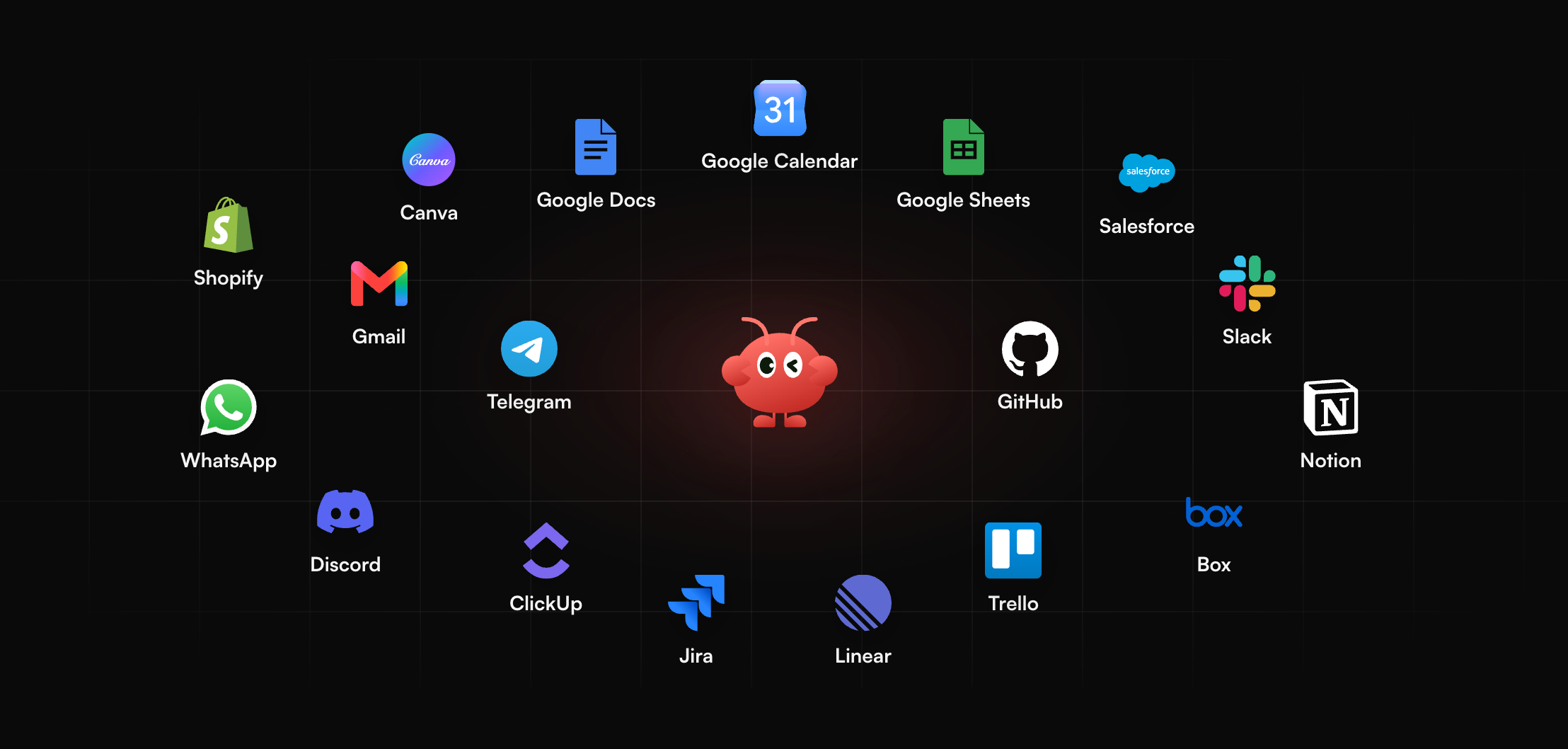
Once you have a model that performs well, recurring work needs a persistent environment. A daily repository review, for example, needs access to project context, a schedule, and a place to return findings.
MyClaw's managed OpenClaw hosting provides a private agent environment that stays online, with managed runtime maintenance and compatible model-provider connections. Model inference is separate from the agent runtime. Confirm exact-version support through your chosen provider before connecting Muse Spark Open or Opus 5.5.
Use three steps to turn your evaluation into a repeatable workflow:
- Launch your agent. Choose a MyClaw plan for the workspace and tools your task requires, then provision the managed OpenClaw environment.
- Confirm your model connection. Check the exact version, provider, credentials, and endpoint features available to your account. Run a small request before relying on tool use or media support.
- Run one repeatable task. Connect the required repository or sources, define the expected result, and review quality and usage. Schedule it once the workflow reliably meets that standard.
For a daily code review, begin with a report of suspected issues and supporting evidence. That gives you a clear output to judge before expanding the agent's responsibilities.
Test Both Models on One Real Task
Pick a task you completed last week and write down what made the result acceptable. Run it through both available model configurations, then compare accepted output, review time, spending, and deployment effort. Use that evidence to choose your starting model, and revisit the decision when your workload or provider options change.
Skip the Setup, Run Best-in-Class AI Agents Now
Launch a managed OpenClaw or Hermes Agent workspace in minutes, with always-on hosting, updates, and support handled by MyClaw.
Get Started